
How is the charge of the fenerceto for the minor and how is it?
Tezi farove sa popular among minorites. Izpolzvat ce from cavers, workers in the subway and just tourists, ribari and lovtsi. Minorskiat fener (horse nadbyagvane) is a good assistant at home and in the village, for work and for rest. Today we’ll teach you how to represent Minnie Feneri, but how and how to zarezhdam correctly.
containment: 1. Features 2. Species and models 3. Specifications 4. How to charge minor fener
Features
The main characteristic on the tosi type is fenerche e, disassembled, design on the forehead, which frees up the rzete. Osventova almost all models of the device are pre-emptive, in some ways they differ favorably from the design of the cell galvanization. It’s not necessary that they replace the battery, they just charge it. From other characteristics, I was looking for whitening:
- Long exploitation stomach (up to 500 cycles on charging / rarefying).
- Good light stream (up to 60 lm and more).
- Long time to work without delay (up to 10-20 hours).
- Good warm and size.
- Ima modifications, which can be used in dangerous areas.
Vsichko tova guarantor is widely used for minnie fenercheta both in production and daily.
Species and models
Today's date is better than the Minnie Fenerchet model, which differs in design and appearance of the battery (AKB). According to the type of bateriite, it is divided into:
- Tin kisselina.
- Nickel iron (alkaline).
- Nickel-cadmium (alkaline).
Parviyat e mozhe bi nay-lesniyat option. This battery saber was used in the original Minnie Fenerchet model.Almost everything from tyah sa service (better for tov in the valley), and a comparatively short exploitation belly and the heat / energy ratio.
Nickel-iron batteries zapochnaha yes installirat in Minnie Feneri from the modifications. Such batteries have better characteristics from kiselinnite, but they have a lot of significant shortcomings - the temple current is self-discharging.
Nickel-cadmium batteries soon byah nay-suitable for mine fenerche. At the moment of sa popularity of batteries from tosi type. Te imat is of average electrical capacity with low temperature, thanks for support and exploitation. The resource for work is plentiful. Maybe the only thing they lack is the high price.
According to the design, minite feneris is divided into:
- Serviced (topping up).
- Without supervision.
When you do this, adding distillerane to water at the time of work, dokato repeat the izskvat itself periodically recharged. Serve in a smarter way in relation to pre-discharge / pre-discharge, but under the same conditions for work, they may “run out”. Visually, the maintenance of the Feneri is different from other models with three fluffs (spores on the cutie) on the page wall on the battery pack. Nay-chesto cross the Feneri models on the Minori behind the zarezhdane: SGD-5 and SGD-5-1 (Lamp for the zadzhane with the head).
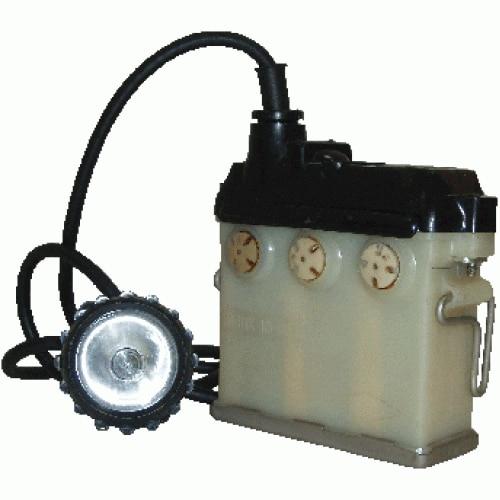
Minorsko fenerche SGD-5
Without support, the design is sealed and they can work in any situation without “out of the blue”. But such devices are much more critical for pre-discharging or pre-discharging. Classically, minor Feneri models without supervision: SGG-1, SGG-5, SGG-5M, SGG-5M0.5 SGG-5-1M0.5 (headlight sealed, M modified).
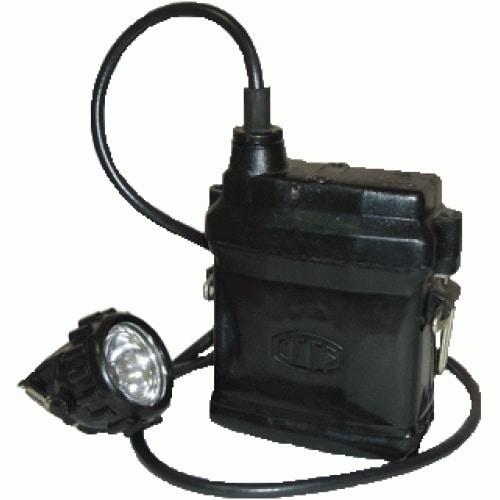 Minorski fener SGG-5
Devices with enhanced explosive safety may be classified as a separate category.Tova does not mean, why don’t you explode yourself, but what can they do and work in an explosive zone (mini-holes, refinery petrols, etc.). Tezi fenerisa is specially designed for spark premahvane.
This product is usually achieved through sealing on the lighting rod and battery, which can be used with protective glass and electrical plugs and cables with double insulation.
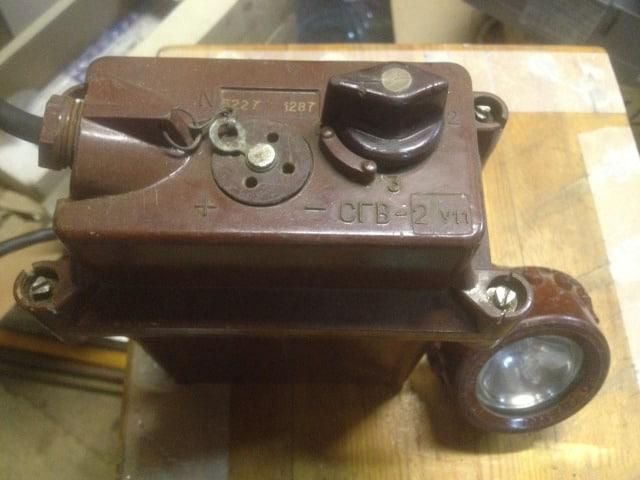 Explosion-proof minen fener SGV-2
Important! Chestly, protect the fenerium of this marker not with the letter B, but with the letter RP, P or I. Each of the letters means protection for the fener from the various among (burning ashes, betting, gas).
More professional minny feneris equipment with twin hulls with pressure switch P3.75-1 + 0.5, cathode one pressurized valve and half the power for each other. Tova allowed not only the lightness of the light, but it is necessary, for example, double the time for working on the fenercheto without delay, but also in the case of the burnt one on one from the spiral, for leaving the darkness of the object with little light.
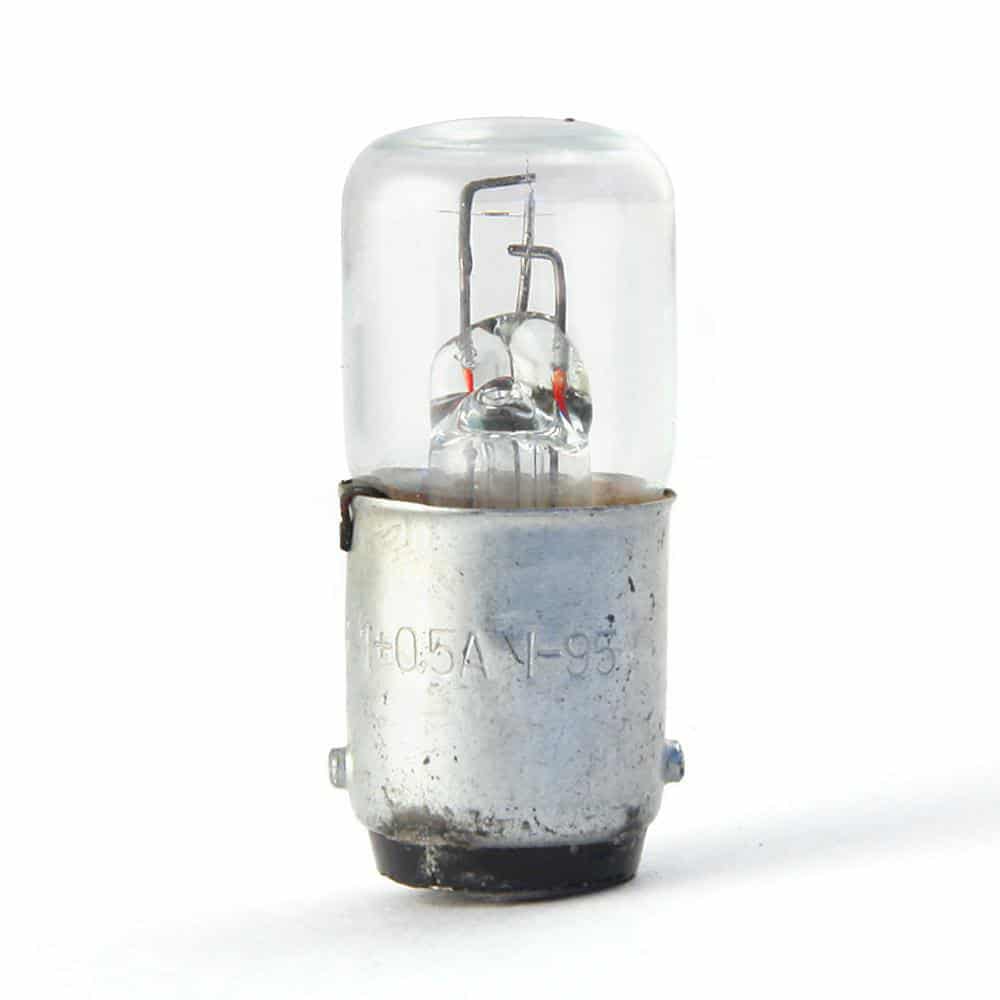
Lamp with double winding for minor fener
Specifications
Main technical specifications for minen fener sa:
- Generate a bright stream.
- Time for unpredictable work without interruption.
- Stomach.
- Teglo.
The light flux is directly dependent on the power used by the lamp. Once upon a time, in a mountainous way, most of the minor equipment with lamps with double winding for operating voltage is 3.75 V (for jelly batteries - for 6.3 V) and current 1 + 0.5 A (0.5–0 .25 A). Svetlinniyat stream on such a lamp is 30-60 lm, depending on the modification to the device.
The time for unpredictable work depends on the capacity for battery. For example, a battery with a capacitance of 6 A / h is completely thinned out for 6 (capacity for a battery) / 1 (current consumption for a powerful spiral for a lampata) = 6 hours. From “kasa svetlina” “energy on the battery would still be enough for 12 hours.
Important! Calculation of the garden for a correct, all-new battery. Over time, the capacity for every battery is even less and the life for batteries is even less.
Stomach. Tazi figure depends mainly on the type and quality of the used battery. Measuring everything in the broya of the cycle on the discharged / rarefied. Nickel-cadmium batteries can burn out up to 500 cycles, tin-kiselinite sa little by little.
How to spawn minen fener
From the point of view of everything, it’s connected with the characteristics, let’s talk for a while for the correct order on the fenercheto on the minor. In the edges on the edges, the duration on the stomach on the battery depends on the tov.
So, let's define some basic modes on the zarezhdane.
Tokt on the discharge of water and water is about 10% of the capacity for the discharge of battery (kisela) or 15-20% (alkaline). The time for discharge can be approximately calculated using the following formula:
Time = capacitance per battery * 1.5 / current on the charge, sometimes the time is measured in hours, capacitance - in amperes / hour, current - in amperes.
The usual time for fully charged is 10-13 hours with the correct current on the charge. The time has been calculated for the empty battery. But the battery is not completely rarefied, time for the generation is still more painted.
In time, it is necessary to constantly, yes, keep an eye on the clemit, for example, it is pre-prevented on the bateriyata almost to the point of damage. For the alkaline battery, the battery is strained on the surface and there is about 4.7 V, for the jelly battery - 7.2 V.
Ako bateriyata sedoplva, togava before any charge, it is necessary, yes, checking the electrolyte for electrolytes in every kutiite (ima tri ot tyah). For yes, send a tov, develop a kapachkite on the open for a pulnene and measure a nivoto from a tnkka prachka. However, the amount of electrolyte has been declining since Thursday, but it is still necessary to use distilled water, which can be purchased from any pharmacy or sent from you through steam to ordinary water and collected for condensate.
Minorskite svetlini se charge ss specially charger. Ako nyama so, you can do it yourself. For yes, send a friend, have a need from a step-down transformer, which can consume a current from 2 A with an initial voltage of 5 V for alkaline and 7 V for acidic batteries, a diode bridge for carrying current, a rheostat (changeable with a wound conductor resistor) with a power -small 10 W and with a resistance of 3-4 ohms, an ammeter and a voltmeter with ranges on the measurement correspondingly 2-5 A and 5-10 V.
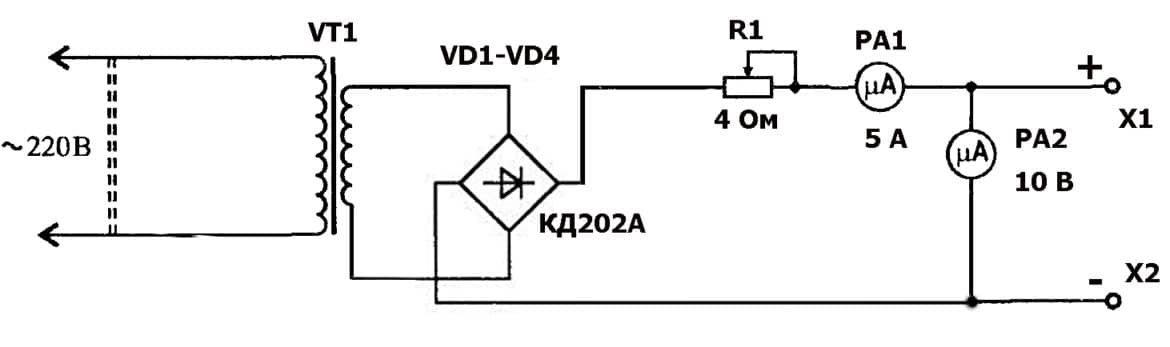 A simple circuit for a charger for minor fener
Let's take a look at how the charger works. The intervoltage of the otiva kjm is the transformer VT1, the slug is at the bottom and the otiva is the current rectifying bridge VD1-VD4. The voltage of the pre-rheostat R1, the ammeter PA1 and the terminal X1 is corrected. Exhaust X2 is used for connecting the negative lead to the battery.
They work with the device of the last beginning: they bring the rheostat of the engine to an extremely clear position of the spore diagram, the battery is connected and the device itself is not connected to the battery. With the help of the rheostat, set the required current on the charge, which controls the current readings on the ammeter.
Time on charge, if necessary, correct the current (or change it) and constantly observe the readings on the voltmeter. In the meantime, the pressure on the terminal reaches 4.7 V (per alkaline battery), the battery is removed from the charge.
Avoid transformerless designs with all sorts of crush suppressors, electrical reels and capacitors. In such a case, put the elements on the charger and clamp on the samata of the battery, there is more voltage, it is dangerous for the stomach!
Now you know how the species of Minnie Feneri exist and you know how to properly feed. And if necessary, you can also use a charger at home.
PredishnaHow to choose LED Fener Cree XM-L T6NextFenerceta How can we choose fener for camping for tourism and camping