
Fluorescent combat and neutral characteristics
Title: Light of battle 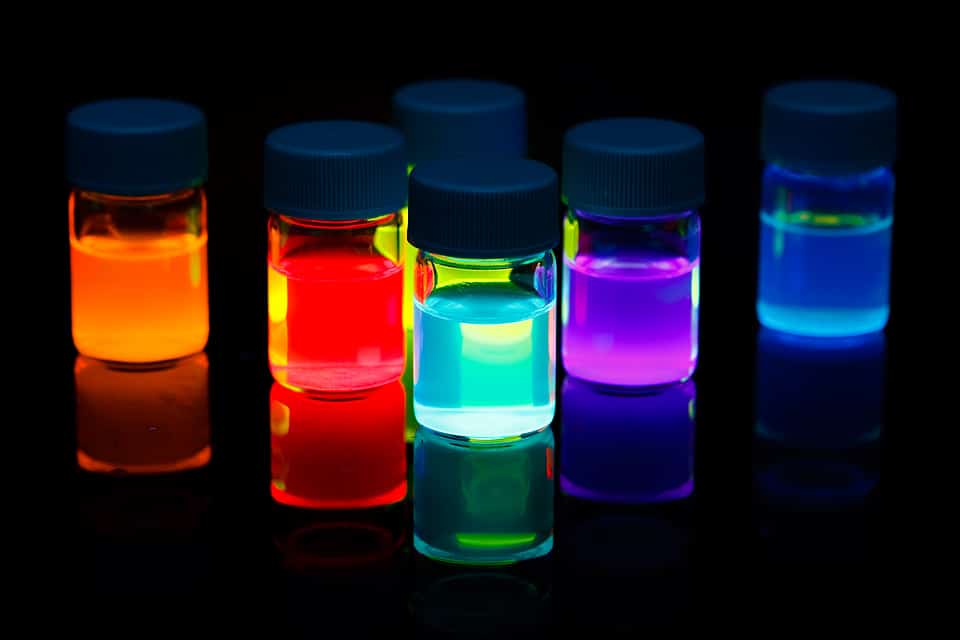
The fluorescent material of the battle does not shine on itself in the dark, as it receives a tosi effect, which is explained by ultraviolet radiation. The applied coating is capable of absorbing, falling on top of it, and transforming it into a visible exclusion from the golyama of the length to the vlnata. Turn off the UV lamp, fluorescent light spiral weednaga. In the case of natural daylight or artificial light, this cover of decency for an ordinary battle, for the sake of some honor, the senarch is invisible or ultraviolet.
Containment: 1. species and species 2. Physical Characteristics 3. Technological aspects and nanasyan for fights
Everyone has seen fluorescent fights, but not everyone knows how and where to go. Nyakoi are rumpled, che takiva material is dangerous for someone who is healthy. This transparent coating contains special pigments, which is non-toxic and safe.
species and species
Sveteshchite connections are offered in a few varieties:
- acrylic fluorescent for decorative work;
- fluorescent email for exterior and facade work;
- universal aerosolen with alkyd and urethane base (in cutia).
Acrylic mixture is used for boyadiswana on various types of materials (kamak, rotten, drywall, darvo, etc.) Closed. Do not worry about working with metal and plastic, for the sake of good adhesion, do not close the top of the smooth surface. That ima is not a little standard colors, but it is mixed between B and other nuances. Boyata is non-toxic and without miris.
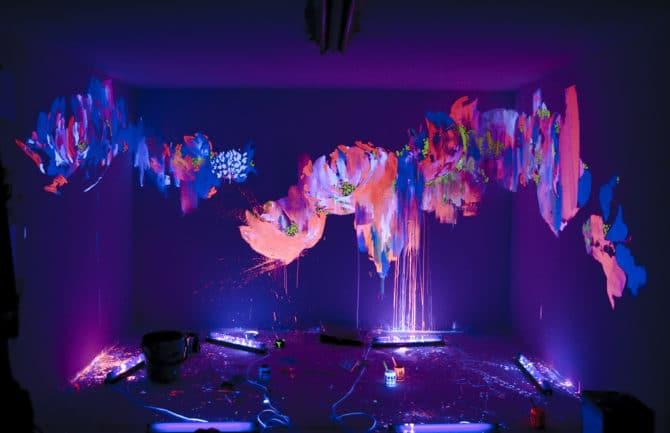 Acrylene FC application
At no cost to moisture resistance, not allowing acrylic coating to be used on lights as decoration for rooms with high humidity (pools, saunas, baths, etc.). Put on an acrylic email including a water emulsion, such as it can be, but it can be diluted with water.
External combat equipment is highly resistant to temperature extremes, changes in air humidity and other adverse climatic conditions. Dobrite adhezionny properties correct the coating sensibly and steadily on wear.
The layer of battle and varnish is moisture resistant and remains steam-permeable in the long term; You can do this with cleaning preparations and detergents. Thank you for the quality theses, you can say it all from crawling in a humid room. Suitable for working with a wide variety of materials - concrete, plates, plastic, stainless and galvanized metal, cardboard, rotten, etc.
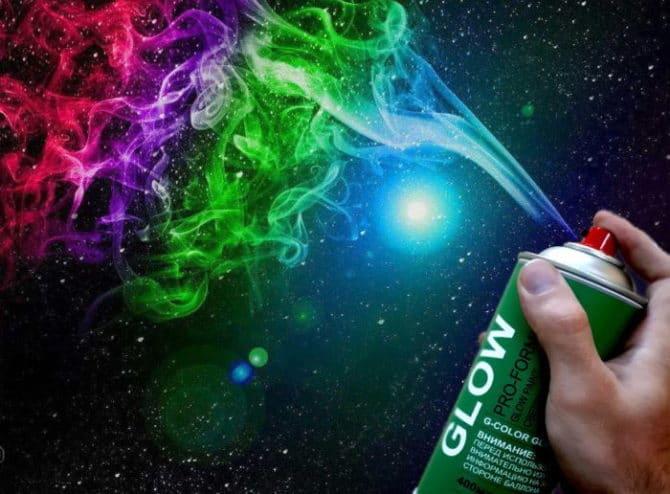 Aerosol with FC
The aerozolnata of the battle has crawled over the drawings and shuffles on various interior and exterior objects. The forest is growing, forming a sensible and healthy cover, somehow allowing for a product and crawling under unfavorable conditions. Aerozolte is intended for use on almost all materials (glass, crystal, metal, plastic, leather, etc.). In the art of car airbrushing, Tosi material is indispensable.
Physical Characteristics
For fluorescent bagril sa, some characteristics are characteristic:
- The effect on ultraviolet radiation is strong, falling on the surface of the surface, which can reach 150-300%. For forgive the fights, the tazi's ability is not overwhelmed by 85%.
- Zarno. Pigment with sagolem polymer particles (10-75 microns), so it is extremely difficult to get a single layer of caressing coverage.For yes, get a good reflection on the light, tryabva and yes, they will put a little layer of battle.
- Losha resistance to light. When exposed to ultraviolet light for a long time, the battlefield becomes pale and ruins the brightness. Finally, the decorative coating is ready, it is protected with a layer of colorless varnish, but the light effect is small.
- Thermal instability. The fluorescent coloring agent destroys its light effect at + 100 ... + 150 ° C and the soil is good.
Specifications for fluorescent fights include the following qualities:
- density (specifically warm) - 1.09-1.12 kg / l;
- viscosity at + 20 ° С (spores VZ-246 or DIN4) - 20-40 seconds;
- dry residue - from 50 to 55% (tegular);
- consumption - 20-90 g / m² (depending on the substrate);
- hazard class - safe.
Systav on cover
Follow the components for inclusion in fluorescent fights and varnish:
- pigment (fluorophore);
- pulnitel;
- bonding agent (polymer acrylic aqueous emulsion or polyurethane resin).
This fluorophore, which shines in the dark, often uses derivatives of rhodamine, cyanine, and aminonaphthalimide. But due to the high price of these substances, those are extremely small particles from the polymer, which will add to the cost based on production time.
Area per application
Coverage per application for fluorescent fights including the following areas:
- signaling signs and signals for the transportation of means (airplanes, helicopters, cars, etc.);
- marking on hazardous equipment (pipelines, machines, inventory, etc.);
- spots of signification, marking, lights, light-reflecting ivitzi varhu drehite;
- wicked decoration for living quarters (when decorating on the walls, tavani), such as bars, night clubs, theaters, restaurants and other entertainment establishments;
- decorirane on the facades on kashchi, fences and various designs;
- painting, sculpture and fine art;
- drawing on the drawings of the top of the chaveshkoto tyalo (tattoo, body art, manicure, etc.);
- decoration and styling on furniture, restoration;
- drawing, drawing on ornaments and images of textiles and items from the wardrobe;
- coloring and decorating on the skin of the product (ranitsi, chanti);
- advertising (banners, report cards, posters, labels, stickers, etc.);
- for bright accents and floral arrangements (live and art);
- film industry and show business;
- car tuning, airbrushing for cars and bicycles.
Boyats are used for decorations for souvenirs, food, figurines, decorations for elkhi koledni and many others.
Technological aspects and nanasyan for battle
Before you apply a fluorescent light, carefully prepare the surface for the fight. It is necessary to remove the old decaying cover from it (mazilka, varos, etc.), clean it from a particle of filth and dust, then you will cry something good mechanically with water from the gba or parsal. Reproachfully, yes, use the ashes for prana, a breather, an ammonium or a solution for soda. Leaving a trace of this surface in a few hours, it’s so easy to see.
You can put up a fight:
- rosary;
- cuvette;
- spray or spray bottle ;;
- valyak for boyadisvane;
- gun for boyadiswana;
- gba.
For coloring, different tools are used, depending on the girth of the proposed work. With the help of a small rosary, this is a small part, for the golems of the square, a valyak or a pistol is crawled for a prskane.
Particles on the luminophore can and will be hidden, therefore, they will color the mixture and make the mixture good before use. Preporchva sesstenate dispersive emulsion and all diluted with water for painting on viscose (not more than 10%). Fluorescent aerosol in kutiyata se vigorously expanding in 2-3 minutes. It’s not a problem, but it’s crazy, but the temperature is around -5 ° C. If necessary, outline on the drawing or template, it will be applied in advance with a mole, a marker and a pre-prepared template.
Technological data on the flowering of all the following operations:
- 1 layer of boyadzhiysk emulsion se nanasya with a rosary or valak for fighting in one shovel;
- sstavyt from the baloney behind the scane all over the top of the boyisanat area from a distance of 0.25-0.3 m;
- the coating is applied, leaving it dry for 3.5-4 hours;
- the next layer is laying in the sap, perpendicular to the previous one;
- a trace of exhalation can be applied to the next layer of battle.
PreviousLight of the fightNextLight of the fight Nanasyan on the fluorescent fight for the body