
Characteristics for choosing on ultraviolet and lamps for looking at plants and using tyahnoto
Title: Quartz and ultraviolet 
Plants in nature live in the sunshine. With all the necessary components on the electromagnetic spectrum for the technology of growth and fruiting. But when looking for plants in a greenhouse for prezimata or when looking for seedlings for pervaz for a seer, it is necessary to “add” plants, so that they can determine the necessary duration for the daytime hours. For this product, various species of art from the source of light are used. Somehow, we see the need for ultraviolet and lamps for plants and kakvi sat those.
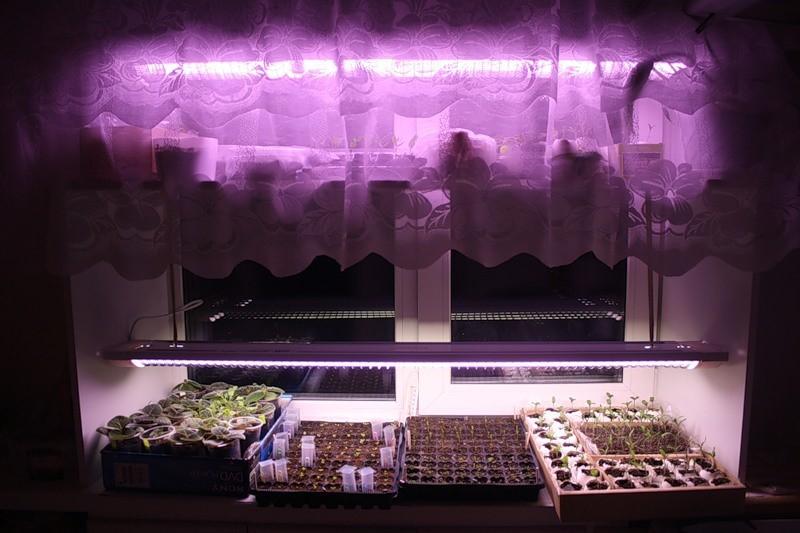 Artificial clarification for plants for pervaz for seer
containment: 1. Influence on the ultraviolet light of the plant 2. Election on lamp 3. Charges for use 4. Ima harm for a man
Influence on the ultraviolet light of the plant
Before we speak for the effect on the ultraviolet treatment of the plant, think about how it is and how it affects people.
The ultraviolet view is electromagnetic radiation, invisible behind the human eye. Click on the UV value in the 10-400 nm range, the optical (visible) range is in the 380-750 nm range.
 UV length per width
Ultraviolet light e is divided into three types:
- kasi vlni 100-280 nm (UVC);
- average length per vein 280-315 nm (UVB);
- long range 315-400 nm (UVA).
But not tsyalat ultraviolet light reaching the earth, kasovlnov or, somehow else, senaricha, UVC does not break the ozone layer.UVB is not weakened in it, reaching to the plant and the chorus, but the cornea and bream do not betray it to retina and do not affect vision. But the long wave has reached the dory to the retinate for a while, on the ground, ima nai-golyamoto, the amount of UV radiation from the tosi spectrum.
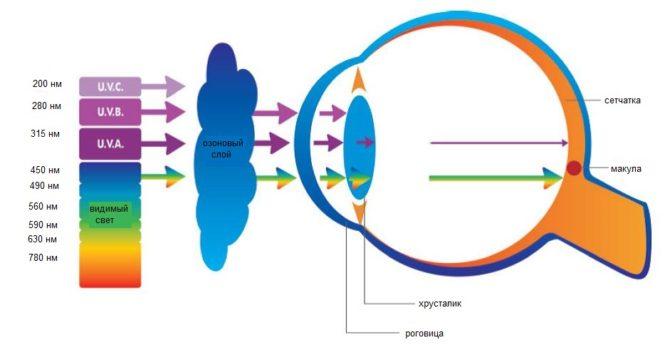
Perception for ultraviolet and visible light spectrum
Ako we are not talking about cosmic ultraviolet, but about artifice, togava every part of the spectrum of trebva and this is clear separately.
Use UVC to absorb molecules, absorb protein and NK. Tova lead to mutation, damage and destruction of DNA. With horata, this is an injury that causes burnout and can lead to cancer. In a short time, the bactericidal effect will be removed, which is due to disinfection of rooms and instruments.
The effect of the mu virhu of the plant is negative, that one can die or, it is said simply, burn out.
An average UVB range from 290-310 nm wide is not harmful, but a long range from 310-350 nm is relatively harmless. Long exposition on plants on such a spectrum for radiation leads to death or sickness. With a short period of cultivation (up to 20-30 minutes per day), we observed an increase in growth on various types of agricultural crops (increase in fruit production from 20% to 50%, depending on the crop).
Long-term treatment (UVA) without causing significant harm to horata or plants. Receive the same daily with slanchevite lachi. The long-term exposure is increased by growth and has a positive effect on any plant species.
And so, for understanding how ultraviolet light influences plants, directing selection from facts:
- synthesized on chlorophyll is painted from long-term exposure and increases from short exposure;
- aktivira se synthesis on carotenoids (leaf stavat of worms);
- Povecheto plants respond to the spectrum of ultraviolet treatment;
- in case of artful oblchvane, they can lay down flower beds more often than not, especially with plants with kas den (tova sa chushki, domati, krastavitsi, barefoot, etc.).
A brief study on plants with ultraviolet light (280-320 nm) indicates another stress factor on plants. A trace of it can and may activate the process, which will have a positive effect on the growth, fertility or fruiting. Forgive me, the plant is inverted and the trace of the tolerir is kindly negative for the environment.
Election on lamp
And so, let’s remember from the fact that for looking at plants, they use primarily not ultraviolet lamps, but phytolamps, but how can we choose the right lamp? UV lamps are used in selected cases (for stress relief and process initiation). For yes, speed up the growth of plants, it is necessary to source for light and be dominated by a length of about 440 nm (blue) and 660 nm (red) and they are not in the UV, but in the visible range. The product is based on the fact that the science of photosynthesis is called photosynthetically active radiation (PAR).
Figures along the length of showing the optical girth and activity on various vital processes in the plant, increasing for the sake of the fact that chlorophyll (high-spread pigment) absorber is dark and blue color is high-intensive.
 Relationship between the activity on the life cycle of a plant and the radiation spectrum
Absorption from various plant pigments, chlorophyll a, chlorophyll b and carotenoids is clearly shown in the figure along the bottom.The carotenoid absorbs most often from the green spectrum, the energy depletion due to photosynthesis.
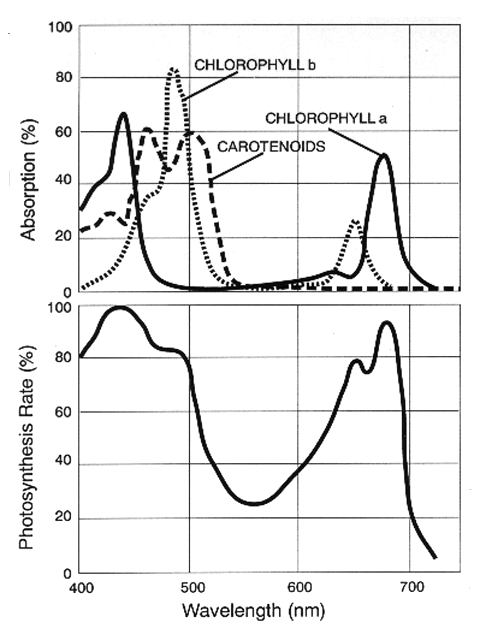 Absorb on light from various pigments
Here you can see that the greenish region on the visible radiation absorbs little from chlorophyll, on the other hand, it reflects it. Therefore, “it is disturbingly green, but the sky is blue”. It has been scientifically shown that the photonite from kasa dzhina to vlnata imat tvarde has a lot of energy and can damage cells (kato kaso vlnoviya ultraviolet, for example), those are se filtrirate from the ozone layer. Energiyata on the photonite from the long side. The horn graph shows the absorption rate, and the dolphin shows the photosynthetic activity.
So, let’s generalize, let’s analyze some kind of long time on the bill, it’s an excuse for how it is when it’s seen on plants:
- 640-660 nm - color worms, for reproductive development and fortification on a stubby system for growing plants;
- 595-610 nm - color, close to orange, necessary for ceftezh and uzryavaneto fruit;
- 440-445 nm - blue-violet and nuances are necessary for vegetative development;
- 380–400 nm - close to the UV range, regulated for growth rate and protein formation;
- 280-315 nm - medium ultraviolet light for plants, some of which are more resistant to freezing.
Therefore, when growing on plants, they use lamps, in which case the main peak on the luminescence spectrum falls at the top red 660 nm and blue 440 nm.
A combination of tezi colors giving a lilac or pink glow. The result is the following mistakenly misunderstood: they often call UV lamps for plants. In addition, you can’t exactly define the length of the tezi on the bottom, those sa, such and such, are smooth, kato khlmove, and cover the neighboring regions, scribble in the top list.
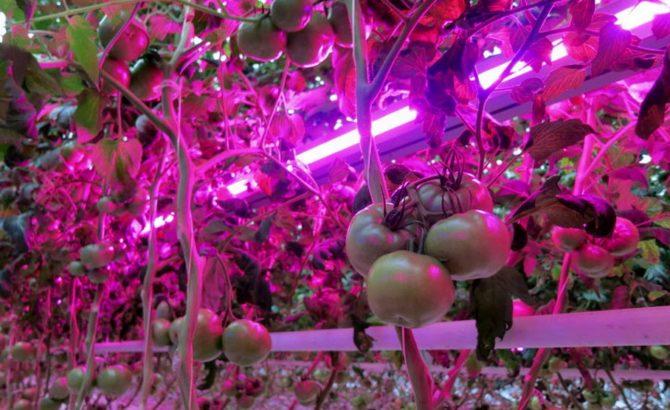 Oglezhdane on domati under phytolampi with plen spektar
In practice, these days, the lamp will pick up either from a separate LED and a long answer, or from a LED with a full spectrum.
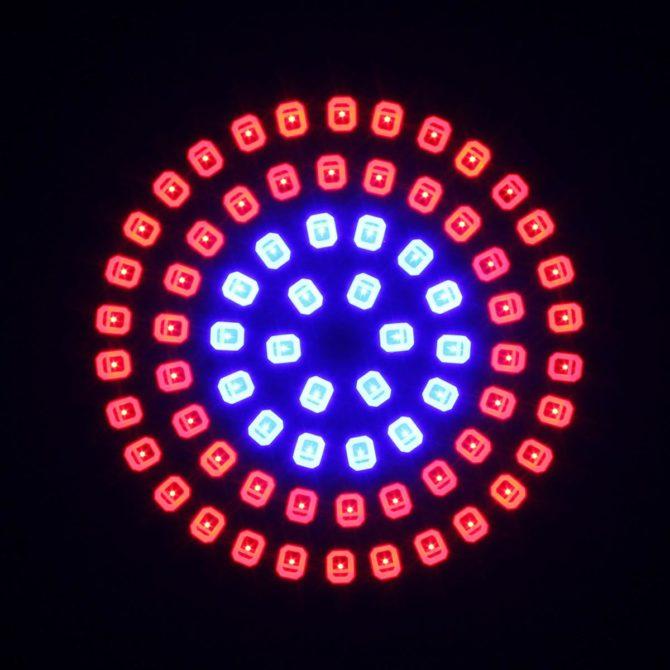
Phytolamp from discrete monochrome LEDs for plants 440 and 660 nm
Please, pay attention: In the spectrum of LED illuminating bodies, the emitters sa from one and the same bloom.
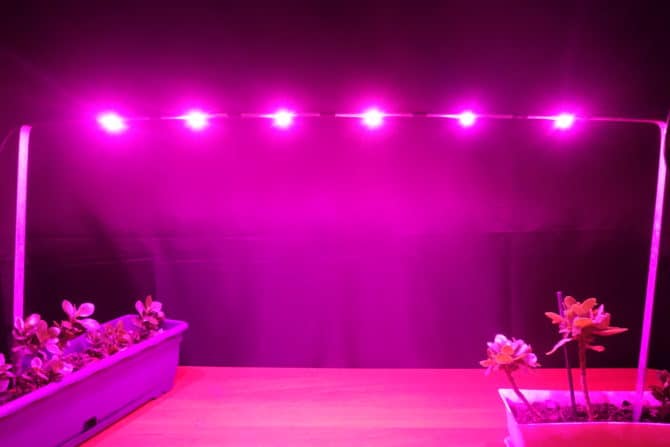 LED lighting rod with full spectrum
To improve the fitolamp models, the manufacturers will add some UV, such and IR LEDs, which will stimulate the plant cells with an additional length on the head.
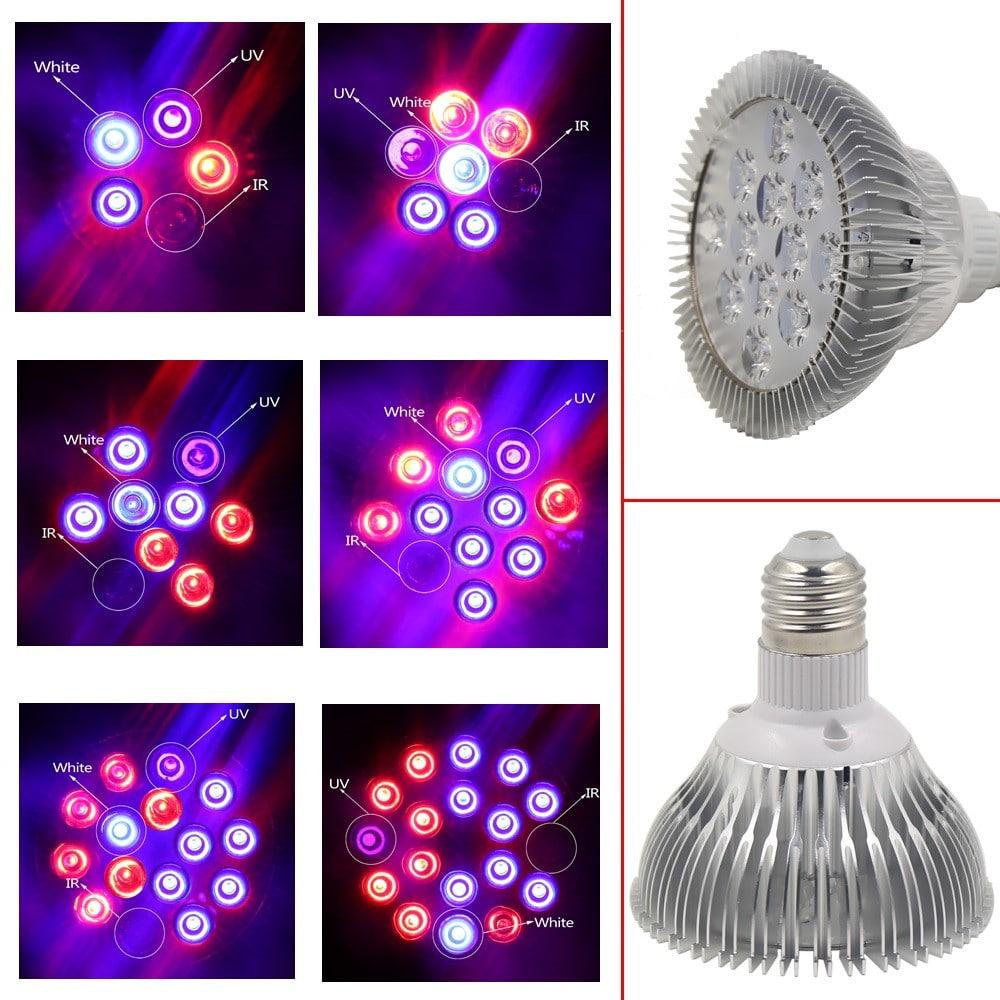 LED phytolamp with IR and UV LEDs
The spectral characteristics on the LED with a full spectrum will cover the area, no matter what you are interested in, but the characteristic is still typical. The picture may be different when used on devices from different manufacturers.
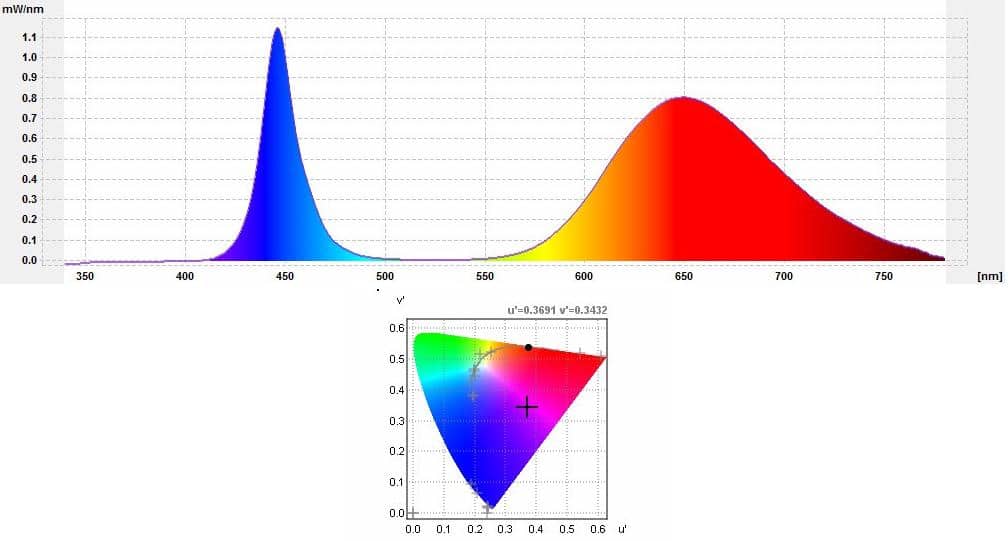 Spectral response on LED for plants
But the LEDs are not the only source of light, they are used for looking at plants near the house. In addition, there are lights and fluorescent lamps, sodium (HPS) and other gas discharge devices. Te imat is completely different principle for action. Tova sa trabi, holding amalgam - a mixture of betting and inert gas. In the borders on the trabata ima elektrod, between which there was a discharge. In time, this is rarefied with ultraviolet light, and wall on the kolbat (trabata) sa cover with special phosphorus, which turns ultraviolet light in the radiation with the desire of the spectrum.
For a good analysis of the technical advantage and disadvantage, watch the video, someone of the author compares the special fluorescent phytolamp requirements from a well-known brand with conventional fluorescent requirements for clarification.
You can make it clear that the spectrum is not sensible smooth cato tosi on the LED product, but it’s such an ima for the peak in the desired color.
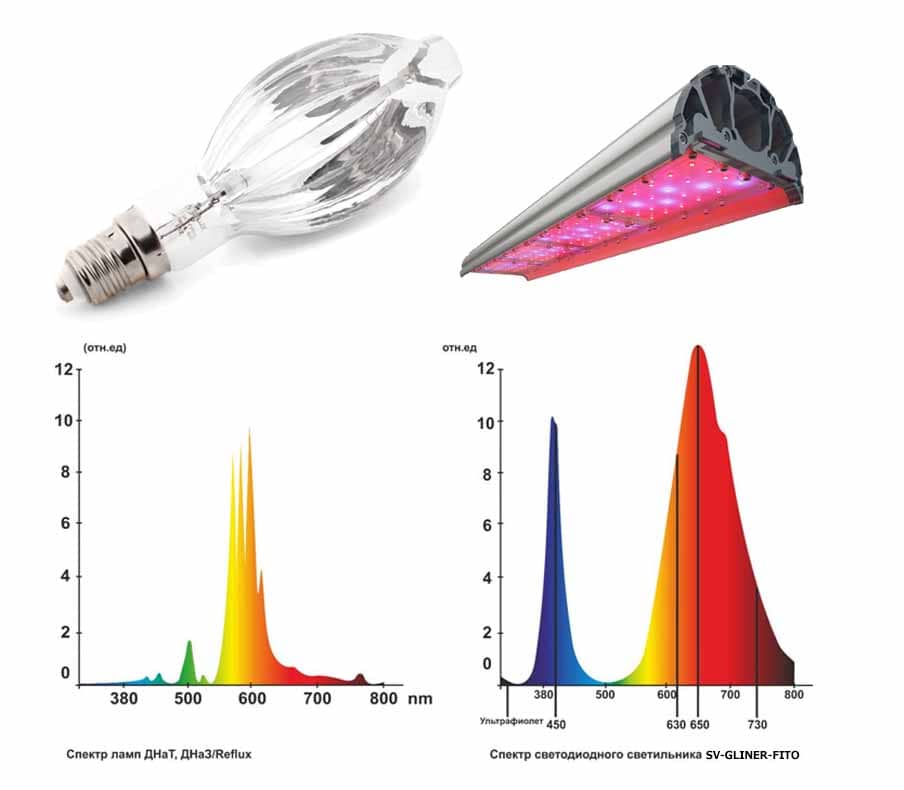 Comparison of spectrum on HPS and phyto-illuminating body
HPS generates enough fuel, this is a tryabva and this is foreseeable when delivered on a lamp directly instalatsiyata. Such a light source, such as fluorescent tubes, a synthetic ballast or an electronic converter for a great job.
Charges for use
But not wines, additional clarification is necessary, and not for flowering flowers and other plants. On the figure for the bottom, you can, yes, you see, recognize for the lips and the surplus for the light; Can you please let me know - detailed information from the floristic guide for all specific plant species.
 Lips and surplus for light
Communicate disputes over the use of ultraviolet and phytolamps until the fact that it is necessary and all oshiguri enough daylight for a certain type of plant. Otbelyazvame it’s clear that it’s been spoiled and that’s due to clarification with a blue nuance prevailing on the stage on the poklvane, and on the stage on the ceftezh and fruit-bearing, darken the red on the bottom and prevail. Toest, tryabva yes choose suitable lamps for every period. The working time on the UV lamp is based on the need of the factory for the product. Many plants will grow well without UV light, but copy for example does not grow very fragrantly, as it is stated on UV light.
The exposure to plants with ultraviolet light is not necessary and is due to comprehended specific results, descriptions in the article are half of the article.
Tryabva so and so foresee that when using the LED lamp, the amount of fuel is generated, such as when using the HPS, for example.This is for protection, if you use HPS, try to keep an eye on the temperature on the list, so don’t overheat. Schematics for additional lighting on blooming in time, choosing individually empirically. Such additional clarification can be perverse during the day and in the evening, as long as the amount of light falling on the top of the plant is enough for the day.
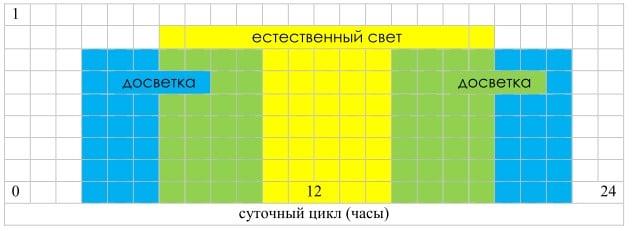 Additional clarification of sutris and evening
Ako dori prez denya ima malko svetlina in your geographical width or in a certain flock, togava lampite for the plants work for the purpose of den.
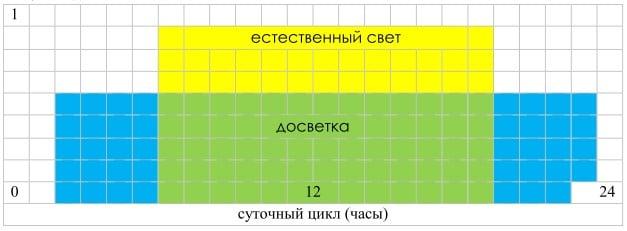 Additional light of the day back kjm sdzharzhanieto ↑
Ima do no harm for a person
Visitors to our site often feed on harmful UV lamps for flowering and especially phyto lamps. Let's figure it out! Ozone can be separated by time for work on UV lamps. Comrade gas, which is dangerous in case of vdishvana, teasing ligavitis, and the effect is detrimental to the top hearty-sadovata system and dori can be brought to death. Osventovata ultraviolet light is dangerous for the eyes. Therefore, do not tryabva and stay in a flock with work ultraviolet lamp, preferably ventilate the room.
Indoor sterilization with UV lamp
But don't worry about the UV fluorescent lights and they'll save you money on the bet. Ako takava krushka se schupi, togava treyabva and take off the fragments, but send a wet cleaning and ventilate the flock. A single stubby lamp does not pose a significant danger.
Phytolampite nyamat is a significant dangerous effect, lighting up with it can tease the spectators of the body. Do not fight and stare such a lamp. Otherwise, other preporki yama.
PredishnaQuartz and ultraviolet light How can we choose ultraviolet fenerche and protect the needNextQuartz and Ultraviolet Lights What is an ultraviolet lamp?