
The main technical characteristics and the scheme on the connection to the lamp LB 40 - how do we change it
Fluorescent linear lamps are considered to be outdated light sources, but contrary to these, they are used quite widely and today. In the Taji article, we speak for the lamp LB 40: take a look at the characteristics, learn how to use it and how to change it and replace the source with a light-emitting diode with a light size.
Containment: 1. Dimensions and specifications 2. Scheme on the wire 3. Contemporary analosi 4. LED colleagues - how to change and the circuit is connected
Dimensions and specifications
First of all, let's take a look at the design on the LB 40 lamp and find out the possibilities. Structurally, the device is a glass flask, in the edges on which there are two electrodes for soldering with spirals from a refractory material (usually tungsten), tying together. The surface of the flask is covered with powdery phosphorus, the flask is filled with an inert gas with a small amount of livestock or amalgam added and is sealed. Disconnect the cable to the electrode of your equipment from the two-pole socket G13.
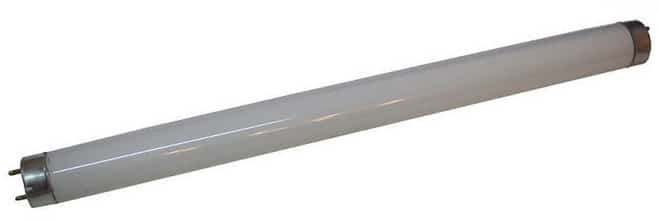 Linear fluorescent lamp
Whenever the lamp is turned on, a luminous discharge is emitted into the crank, some of the molecules are alive and radiate into the ultraviolet spectrum. Svetlinata, falling at the top of phosphorus, foreshadows a bright radiance, but always in the visible spectrum, and samata se absorbs from eating phosphorus and glassy on lampata. According to Tosi, the device was started, the light itself is visible. The marking of the LB 40 is deciphered, somehow as follows:
- L - linear fluorescent lamp;
- B - byala svetlina;
- 40 - power per device in watts.
What is relevant to size on tosi source on light:
MarkiraneLength, mm Diameter, mm plinthLB 40120038 or 25.4G13
Now let's take a look at the main characteristics of the LB 40:
CharacteristicParameterSave voltage, V220 or 127Consumer power, W40Light stream, lm2800Color temperature, K3500Color rendering index (RA or CRI)60-69%Resource, s10000 back kjm sdzharzhanieto ↑
Scheme on the wire
All luminescent lamps are connected to the electrical network through special control equipment - electromagnetic (EMPRA) or electronic (ECG). In the first case, the electromagnet control of the throttle (ballast) e requires a neon starter.
 Electromagnetic ballast including electromagnetic ballast and starter
The electronic ballast is an independent device and does not require anything additional.
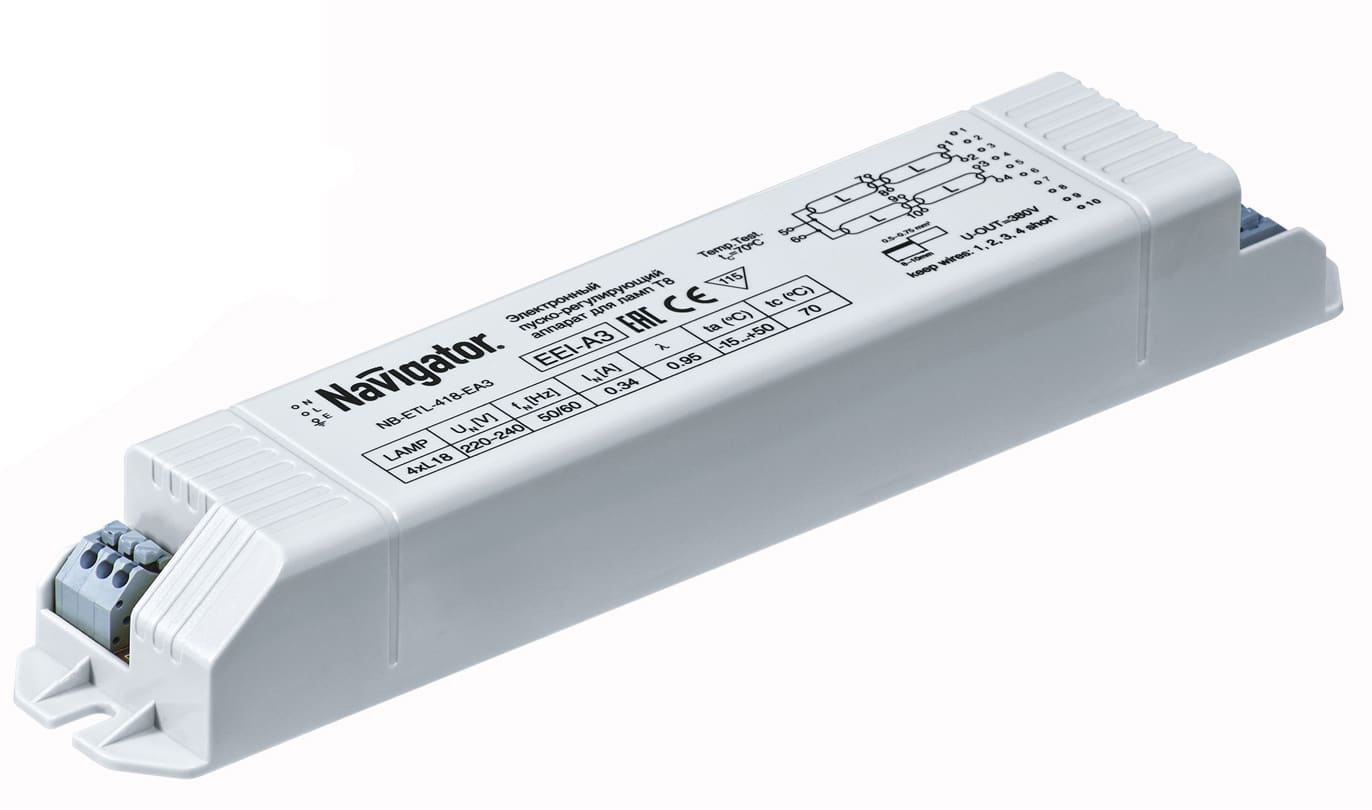 Electronic ballast
Enabled via EMPRA
Think for a follow-up typical scheme turn on linear fluorescent lamps LB 40, designed to work in a network from 220 V, through an electromagnetic ballast.
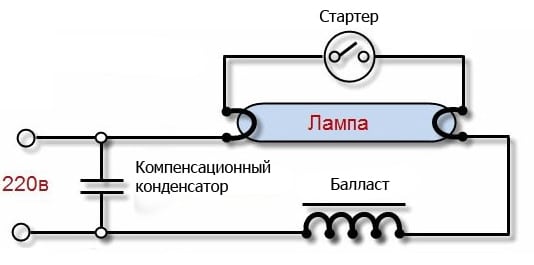 Typical circuit for switching on lampat LB 40
A trace was filed on the storage of the lampata, the warning is to prez the ballast of the otiva km spiral on the lampata. Repeat the exhaust on the spiral sa svyarzani through the starter. Dokato spiralize with jelly, the resistance to the gas propep in the flask is high and is not emitted. A whole lot of tension, giving the starter a starter - and that vednaga work, contact me, they’ll shut it up. Prez spiralize the soil and the flow of current, which is dirty.
Track about 1 second contact on the starter ce boil, tock prez spiral and spiral ballast. The latter, for the sake of reverse self-induction, forming a voltage pulse from the order of 1 kV at the top of the cathode to the lamp. Vznikva having broken through the gap between gas and prez kolbata soil and flowing current - the lampata is zapalva.
The ballast is amusingly switched to the current-limiting mode, which is supported by the low voltage, it is necessary to work on the LU 40. Now the starter is excluded and there are no signs of not participating in the work on the light source. Ako, for some reason, the lamp is not brighter, the process on the starter is repeated.
To ballast the totality of the chokes, this imago is inductively resistive, somewhat increasing the reactivity of the components for the consumption of electricity and painting the efficiency of the entire device. Tozi lack e partially eliminated through the connection to the compensation capacitor is hard on the verigata, some painting of the reactive component. Tozi method for startirane on LB 40 se naricha is burning, ty kato predi and sunk the source on the light, do not heat the cathode coils.
Important! In the basin, the circuit uses a lamp and a starter, intended for a working voltage of 220 V, and a power throttle corresponding to the power of the lamp (40 W).
Switching on via electronic ballast
Ako everything is clear and unambiguous with electronic ballasts - all of them are switched on one by one and in the same circuit and they differ in terms of power, but with electronic ballasts the situation is slightly different. They produce a lot of variety from modification to the same device, capable of servicing various types of lamps - from 1 to 4.
But dori and here is not all that sensible, tay kato scheme for tyahnoto turn on sa enough and vinagi will apply directly to the weight on the ballast. Osventova theses of the scheme are available in the friendly documentation.
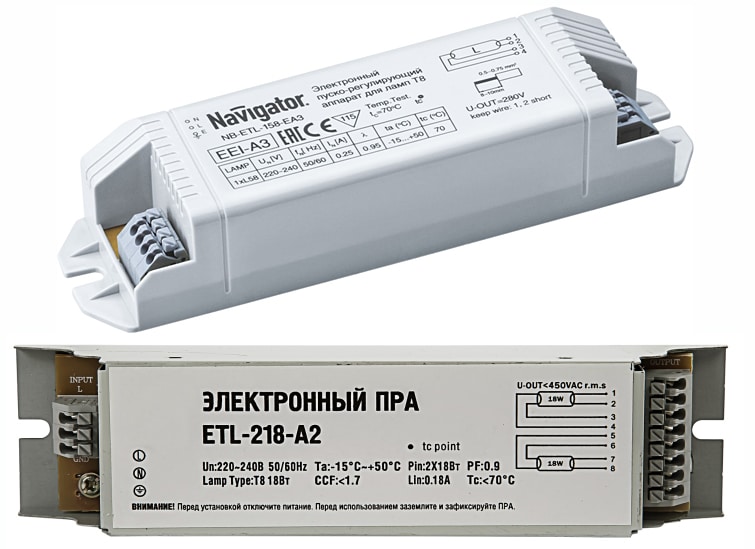 These electronic ballasts can serve one (burn out) and two lamps at the same time
The only thing when choosing an electronic device is to pay attention to the power on the lamp, with which they can and work.In a mountain shot, for example, the electronic ballasts are designed to work with a 58 W lamp (mountain) and 2 x 18 W.
Contemporary analosi
These linear fluorescent lamps LB 40 practically do not produce all of them, but they produce a lot of lamps, intended to work with them. Ami ako standard izgori mush? Exactly simple - just replace with a modern analogue, which is LB 36. Lamp from Tozi type and have similar characteristics, but have power with 4 W down from the basin to the original LB 40. significantly work on the lampat, so boldly put it on. When changing to a lampata LB 40 with LB 36, nothing in the lampata and in the samata chain does not shake and change. To that dump the old, lay down the new.
Today's date LB 36 is also produced by local manufacturers, but you can always choose products for foreign companies for sale. For example Osram L 36W / 640 or Philips TL-D 36W / 33-640.
Hello! Crush on foreign manufacturers, they differ somewhat in color temperature, which is 4000 K and 3500 K at LB 36. But the difference is negligible, and the color temperature is almost indistinguishable by eye.
LED colleagues - how to change and the circuit is connected
Light-emitting diode lamps will gain all popularity and will surely replace other types of lamps, including fluorescent ones. Is it possible to replace fluorescent lighting with LED without special care? For example, light up LB 40 for almost forever and still install it in many organizations and institutions - why buy new LEDs?
Indeed, there is no need. Such a light source can also work with LED lamps. All packs of LED analosi on LB 40.Analosi - the imam foresaw in relation to size and design: length, diameter and base G13.
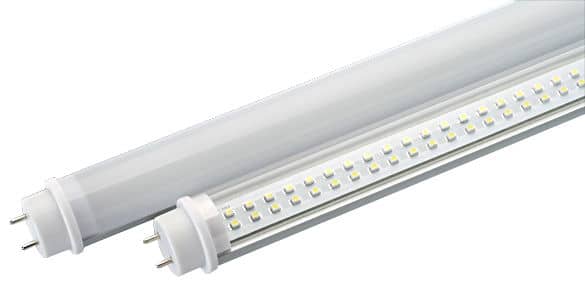 In relation to the size and type on the basis, the basin T8 LED lamp is analogous to LB 40
The principle is to work hard, understand it, it is different - all packages are LED. So, I don’t try anything, I’ll change it in design for the illuminator itself, it’s enough, I’ll change it for a negligent electric chain, which is the focuser at the top, the standard circuit is connected to a linear LED mugs T8 with voltage protection 220 V.
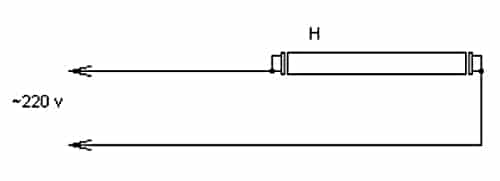 Including string on T8 LED lamp for 220 V
Important! When you buy T8 LED plugs, try and be sure that they are equipped with a driver and that they are designed and work in the network from 220 V. This model has a low voltage, which cannot and should be distinguished from these, from which we need externally.
Lamp with EMPRA
Initially, the diagram for a lamp with an electronic ballast and a single source for a light fixture is as follows:
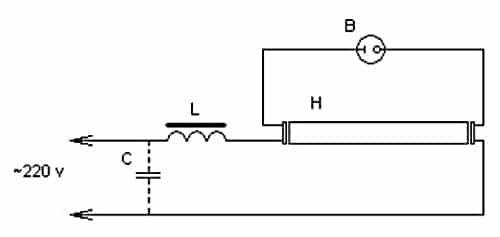 Diagram for a fluorescent lamp with an electronic ballast and a single light source
Precisely this is perverse according to the following algorithms:
- Izvadame starter (ima base and se vkarva in the cartridge).
- Svarzvame on kaso ballast, some may be, yes, they will be mishandled, without yes we are wasting time.
- Othapvame compensatory capacitor.
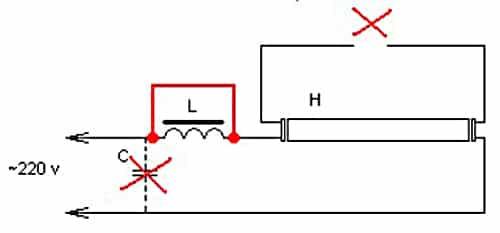 The need for improvements in the lighting body
Kraynata scheme trebva yes izglezhda is like this:
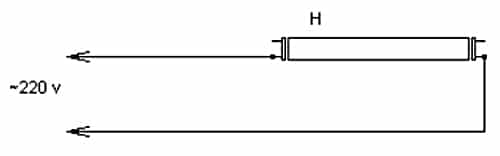 Modified circuit for lighting rod
Lamp with electronic ballast and two lamps
Initially, the diagram for a lamp with an electronic ballast and two sources for a light fixture is as follows:
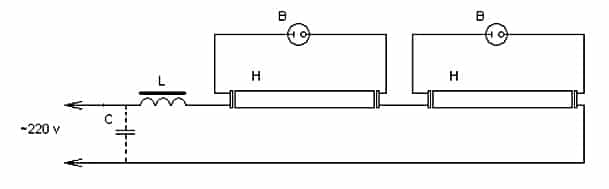 Diagram for a fluorescent lamp with an electronic ballast and two light sources
All the latest algorithms have been pre- pared:
- Predyastiyat Izvadam.
- Svarzvame on koso ballast.
- Othapvame compensation capacitor.
- Change the schemat on the link to the lampata, so in the extreme estimate we get the following:
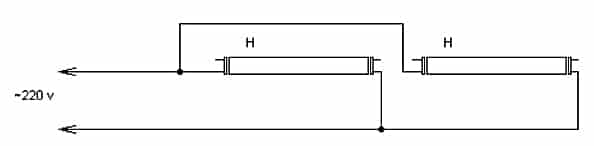 Modified lighting chain
Lighting rod with electronic ballast
Initially, the diagram for a lamp with electronic ballast and a single source for a light fixture is as follows:
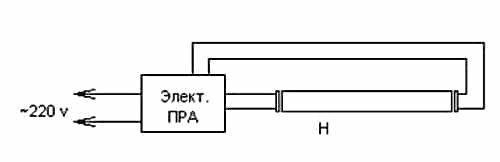 Diagram for a fluorescent lamp with electronic ballast
Turn off the electronic ballast and tie the wires ahead of it according to the tasi scheme (markirana in cherveno on figurata). Isolarame other dvama and gi leave me free.
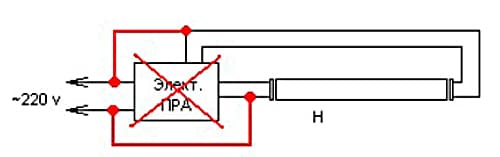 The need for improvements in the lighting body
Kraynata scheme trebva yes izglezhda is like this:
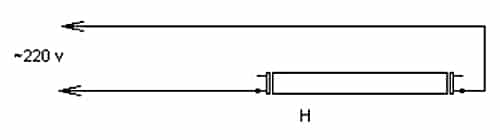 Veriga modified to lampata with electronic ballast
This is familiar with the linear fluorescent lamp LB 40. Now we know how to do it, how to perform it, and how to do it correctly. E, if necessary, we can forestry and replace the LEDs with a standard size.
PreviousFluorescent lampsSpecial fluorescent lamps with G13 base and technical specificationsNextLuminescents How do fluorescent lamps look and how do they differ from linear ones?